
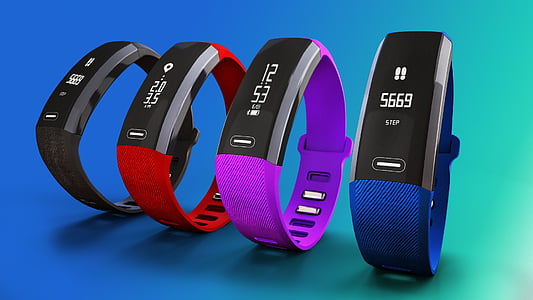
external frame (Image: https://i2.pickpik.com/photos/64/696/909/heart-rate-monitoring-device-bp-monitoring-device-health-monitoring-device-fitness-band-thumb.jpg)Key Feature: Track Anything. SPOT Trace is an advanced satellite tracking device designed to maintain an eye fixed in your most dear belongings, no matter where they are on the planet. Ideal for each private and ItagPro professional use, this device ensures which you could monitor the situation of your important gadgets or autos with ease and precision. Real-Time Monitoring: ItagPro Track your assets in close to actual-time using SPOT Mapping on your smartphone, laptop, or tablet. Instant Alerts: Receive textual content or electronic mail notifications the second your asset moves. Global Coverage: Utilizes 100% satellite expertise, functioning in remote areas the place cellular signals cannot reach. Reliable Connectivity: Ensures consistent monitoring capabilities even in a few of the most isolated locations on Earth. SPOT Mapping: Save and share the places of your tracked belongings. This feature allows for simple monitoring and coordination, whether for private valuables or skilled equipment. Compact Design: Small and inconspicuous, making it straightforward to attach to whatever you choose to trace. The SPOT TRACE® Satellite Tracking Device is a useful instrument for anybody needing to maintain tabs on their worthwhile property, irrespective of how far off the crushed path they might go. Whether it's securing your personal belongings, monitoring a fleet of automobiles, or making certain the security of high-worth objects, iTagPro device SPOT Trace affords peace of mind via chopping-edge satellite technology.
(Image: https://media.istockphoto.com/id/477274717/vector/laptop-tracker.jpg?s=612x612&w=0&k=20&c=GSLL-r8cv5SBXPNiMJwat5MTVeKpI5mzcAcYEPuAwE4=)Should you remember the digital actuality (VR) hype extravaganza in the early nineties, you in all probability have a very specific idea of what digital reality gear includes. Back then, ItagPro you may see head-mounted displays and power gloves in magazines, on toy shelves and even in movies – the whole lot looked futuristic, high tech and really bulky. It has been more than a decade since the preliminary media frenzy, and while other expertise has advanced by leaps and bounds, much of the tools utilized in virtual actuality applications appears to have stayed the same. Advances are sometimes the result of other industries, like navy purposes and even leisure. Investors hardly ever consider the digital reality area to be vital enough to fund initiatives unless there are particular applications for the research associated to different industries. What form of gear does VR rely on? Depending on how loosely you outline VR, it'd only require a computer with a monitor iTagPro bluetooth tracker and a keyboard or a mouse.
Most researchers working in VR say that true digital environments give the user a way of immersion. Since it is simple to get distracted and lose your sense of immersion when taking a look at a basic laptop screen, most VR methods rely on a more elaborate display system. Other fundamental devices, like a keyboard, mouse, iTagPro bluetooth tracker joystick or controller wand, ItagPro are sometimes a part of VR programs. In this text, we'll look at the several types of VR gear and ItagPro their benefits and disadvantages. We'll start with head-mounted displays. Most HMDs are mounted in a helmet or a set of goggles. Engineers designed head-mounted shows to make sure that no matter in what route a consumer would possibly look, a monitor would keep in front of his eyes. Most HMDs have a display screen for every eye, ItagPro which gives the person the sense that the pictures he is taking a look at have depth. The monitors in an HMD are most frequently Liquid Cystal Displays (LCD), though you might come throughout older models that use Cathode Ray Tube (CRT) shows.
LCD displays are extra compact, lightweight, ItagPro environment friendly and cheap than CRT shows. The two major benefits CRT displays have over LCDs are display decision and brightness. Unfortunately, CRT shows are normally bulky and heavy. Almost every HMD utilizing them is both uncomfortable to put on or requires a suspension mechanism to help offset the burden. Suspension mechanisms limit a person's movement, which in turn can affect his sense of immersion. There are many causes engineers hardly ever use these display applied sciences in HMDs. Most of those technologies have restricted resolution and brightness. Several are unable to provide anything other than a monochromatic image. Some, just like the VRD and plasma display technologies, might work very effectively in an HMD however are prohibitively expensive. Many head-mounted shows include speakers or headphones so that it may possibly provide both video and audio output. Almost all refined HMDs are tethered to the VR system's CPU by one or more cables – wireless techniques lack the response time necessary to keep away from lag or latency issues.
HMDs virtually always include a tracking device in order that the perspective displayed in the displays changes as the user moves his head. Some systems use a special set of glasses or travel security tracker goggles along with other display hardware. In the following part, we'll have a look at such a system – the CAVE display. Ivan Sutherland, a scientist extensively considered to be the father of digital reality, described the ultimate pc display apparatus in 1965. He wrote that it might include a room the place a pc managed the existence of matter. The computer would be capable to create virtual objects that, to a user inside the room, appeared to be actual, solid matter. The writers of “Star Trek: The following Generation” borrowed this idea and known as it the Holodeck. It's known as the CAVE system, which stands for Cave Automatic Virtual Environment. A CAVE is a small room or cubicle the place not less than three partitions (and generally the ground and ceiling) act as large monitors.